Beneath the Surface — An SDG 14 Short Film
by Quentin Lee
A short educational film about why the oceans need protecting, produced end to end with a five-tool AI pipeline — and, importantly, planned before a frame was generated.
Quentin wrote it around a stated theme: *"The Ocean Needs Heroes, and We Can Help."* Everything downstream serves that line.
**The structure is persuasive, not just narrative.** Eight scenes run hook → the problem → why it matters → everyday actions → community action → hope → personal promise → closing card. That's the shape of an advocacy film: establish stakes, widen from what *one person* can do to what *everyone* can do, then land on a commitment. The final beat before the credits is his own pledge, spoken in first person — *"I promise to reduce plastic waste and encourage my family and friends to do the same."*
**The visuals carry the argument too.** Scene one opens on a cinematic sunrise over Victoria Harbour where clear water transitions into plastic-choked water *within a single shot* — the whole thesis stated as one image. The film then moves through damage (a turtle struggling among drifting bags), beauty worth saving (dolphins, coral, sunlight through water), action (a Hong Kong schoolboy refusing single-use plastic at a convenience store; families cleaning a beach), and finally restoration (turtles swimming free through clean water). The picture arc mirrors the emotional one.
**It's deliberately local.** Victoria Harbour, a Hong Kong beach, a Hong Kong ten-year-old. Grounding a planetary problem in streets his audience recognises is a real persuasion technique, and a choice he made rather than inherited.
**And it's calibrated for its audience.** One prompt specifies *"emotional but suitable for children"* — he's directing tone, not just content, and thinking about who is watching.
Each scene was written on two tracks: a **Veo prompt** describing what the camera sees, and a separate **narration** line for the voiceover. That split is how animation and documentary scripts are written professionally, because picture and voice are different crafts that must be planned together. The pipeline then ran **ChatGPT** for story, **Google Veo** for footage, an **AI voiceover** for narration, **Google Vids** for the edit, and **Lyria 3** for score — five tools, each owning one stage.
More like this
AI Literacy Part A — AI Music Video
by Charles Liu
An original AI-generated music video — students script it, generate the images and scenes, create their own music and lyrics with Suno, animate it, and edit it all into a finished video.
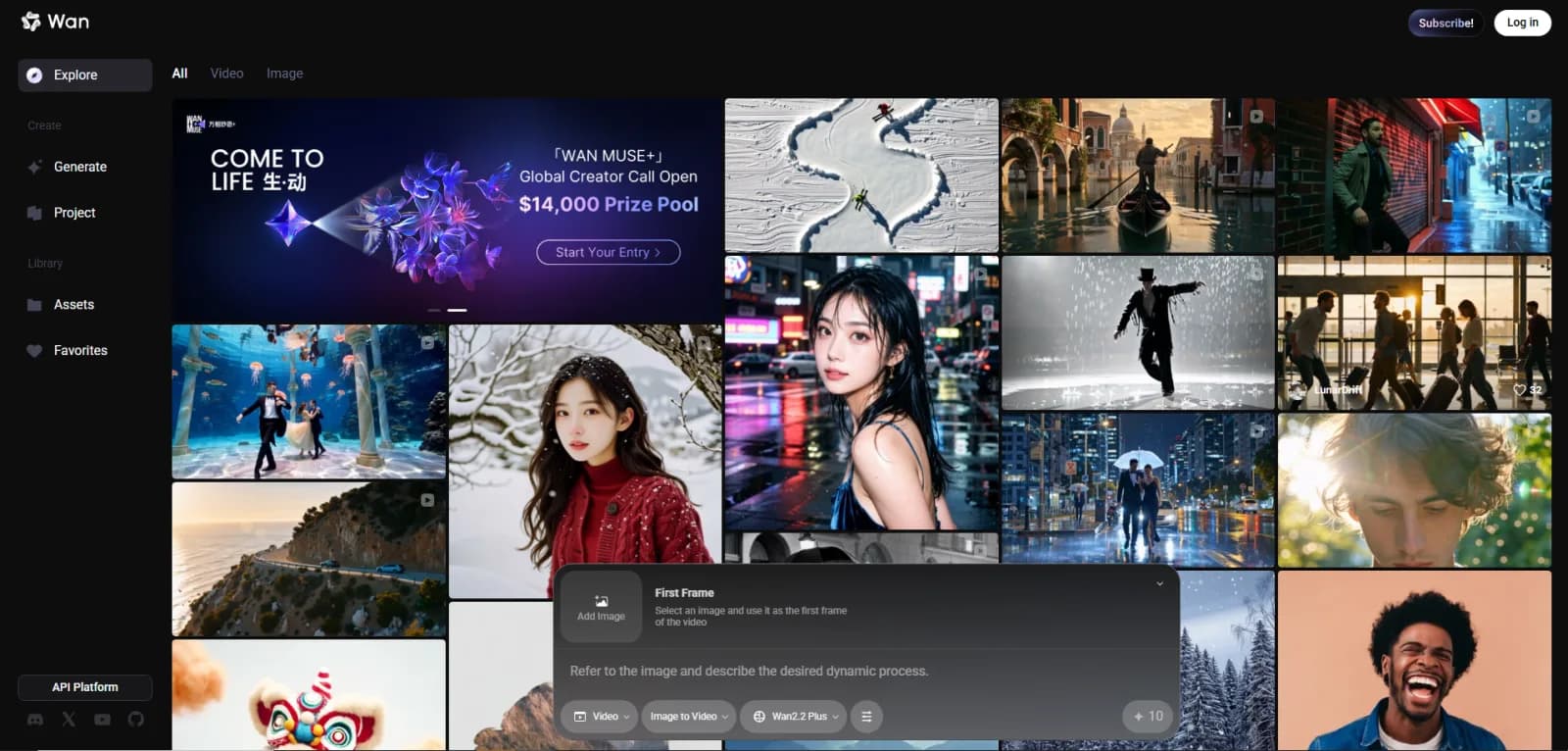
AI Video Creation with Wan
by Uncredited
Students bring images and ideas to life as video using Wan, a leading AI video-generation model — directing scenes with simple prompts.
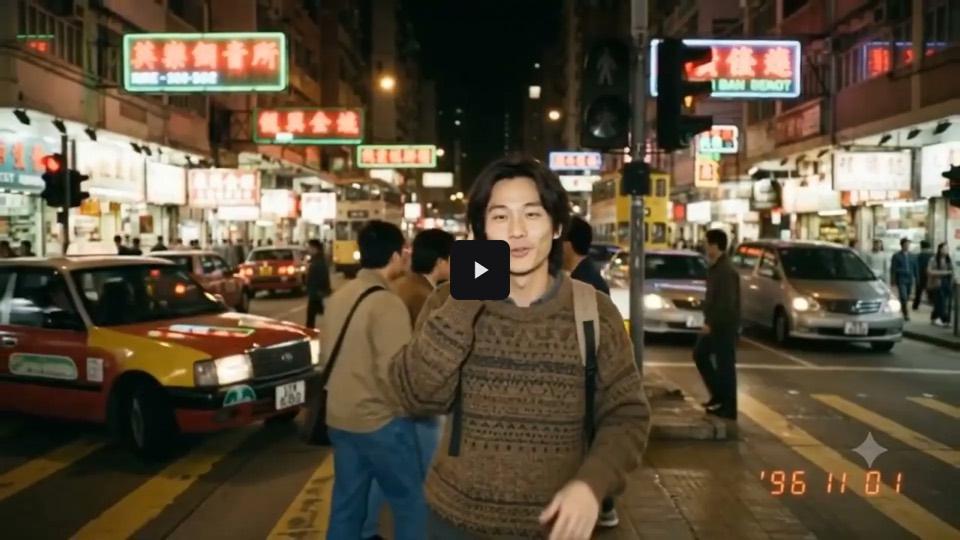
Hong Kong Reimagined: An AI-Generated Travel Film
by Lau Shing Long
A travel film that re-imagines Hong Kong through generative AI, carried by an original song written and performed in Cantonese — built after trialling four video models and settling on Google Veo.