
Bridge Battle — AI-Animated Anime Short
by Quentin Lee
Quentin directed a full animated short — a rain-soaked bridge battle in classic shonen anime style — using Google Vids for the animation and Lyria for an original score. What makes it worth studying isn't that AI made the pictures. It's that the pictures were *directed*.
The short runs seven scenes across sixty seconds, each one planned with its own timecode before a single frame was generated: the send-off at the village gate (0:00–0:08), arriving at the bridge, the ambush, a substitution-jutsu reversal, a teamwork strike, the turning of the tide, and the aftermath (0:49–0:60). That's a storyboard and a shot list — the discipline of deciding what happens and for how long *before* you start producing.
**The craft concepts this teaches — the transferable part:**
**A style anchor keeps a film coherent.** Every one of the seven prompts ends with the exact same phrase: "Vibrant Japanese shonen anime style, bold ink outlines, cel-shaded, dynamic speed lines." When clips are generated independently, they drift — different linework, different colour, different characters. Repeating a fixed style token is the single most important technique for holding a look together across shots, and it's how professionals keep AI-generated sequences consistent.
**Camera language is a real vocabulary.** Each scene calls its own move, and the choices escalate deliberately: a slow push-in on the send-off, a low tracking shot along the bridge, a whip-pan when the ambush lands, a fast zoom on the smoke of the substitution, an orbiting low angle around the heroes, rapid inter-cutting at the climax, then a slow crane back into a wide aerial for the ending. Camera pace mirrors emotional intensity — calm shots when the story breathes, violent shots when it doesn't.
**Weather and light carry emotion.** The rain is a throughline: it begins as gentle drizzle at dawn, thickens into heavy rainfall and fog on the bridge, breaks into lightning at the ambush, then softens back to drizzle as sunlight finally cuts through the clouds in the last shot. Lighting shifts with it — soft grey, dramatic grey-blue, the orange glow of fire on wet planks, then warm gold. That's pathetic fallacy, the oldest trick in visual storytelling, and it doubles as continuity glue tying independent clips into one world.
**Structure and escalation.** The fight builds properly: one hero threatened, then two fighting side by side, then all three converging. Stakes rise in stages rather than arriving at full volume.
**Ending on emotion, not victory.** The final scene doesn't celebrate the heroes. It pulls back on the two defeated antagonists lying side by side, hands reaching out and touching, their headbands cracked beside them. Choosing to close on the opponents' humanity rather than the win is a genuine authorial decision — the kind of choice that separates a sequence of cool shots from a story.
**Scoring to picture.** The Lyria soundtrack has to match that arc — tension through the ambush, release in the aftermath. Music is what welds separate clips into a single emotional line, and cutting picture and sound to agree with each other is the last mile of any edit.
Taken together it's a genuine pre-production-to-post pipeline: concept, script, timed storyboard, art direction, generation, scoring and edit — the same sequence a real animation studio runs, at a scale one student can hold in their head.
More like this

AI Literacy Part A — AI Music Video
by Charles Liu
An original AI-generated music video — students script it, generate the images and scenes, create their own music and lyrics with Suno, animate it, and edit it all into a finished video.
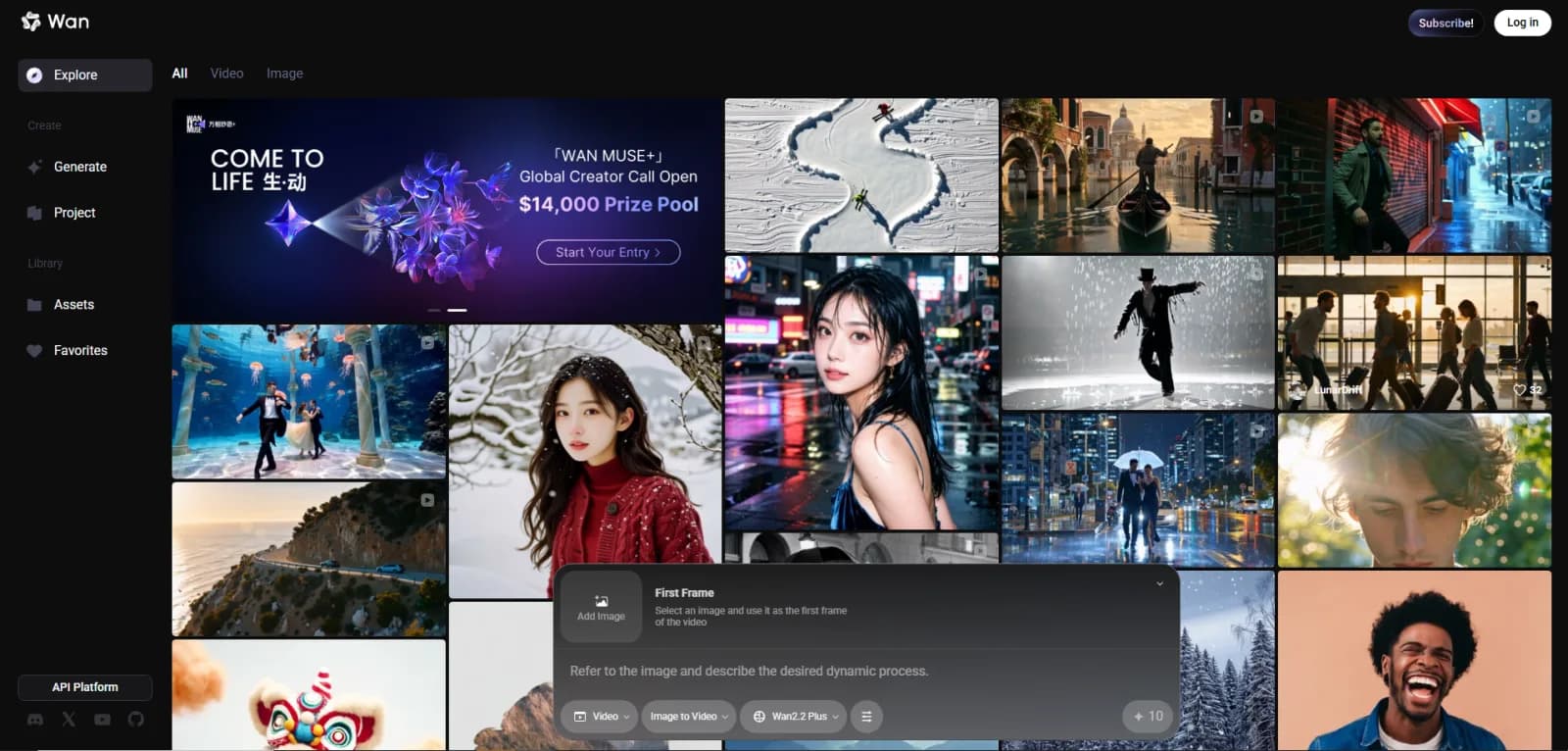
AI Video Creation with Wan
by Uncredited
Students bring images and ideas to life as video using Wan, a leading AI video-generation model — directing scenes with simple prompts.
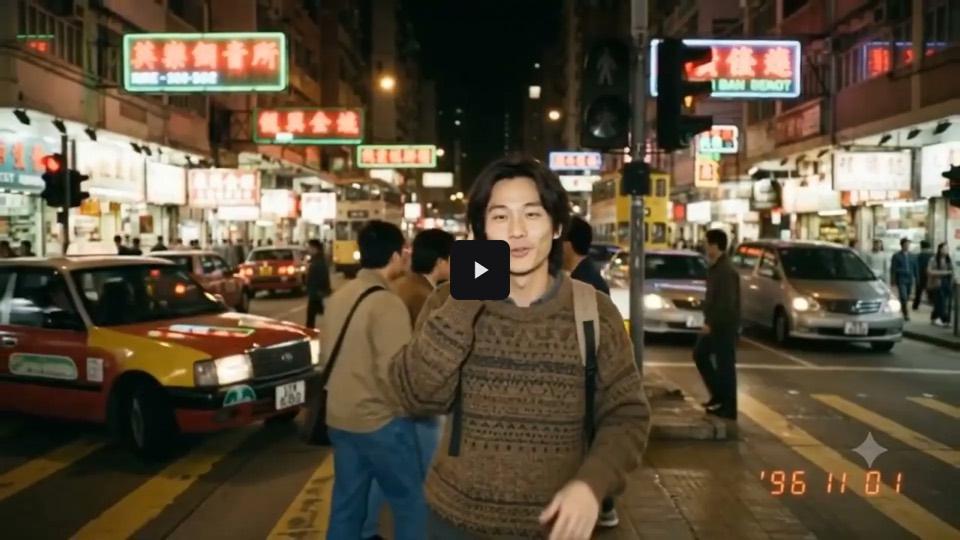
Hong Kong Reimagined: An AI-Generated Travel Film
by Lau Shing Long
A travel film that re-imagines Hong Kong through generative AI, carried by an original song written and performed in Cantonese — built after trialling four video models and settling on Google Veo.